The Ultimate Manual for Selecting plus Combining High-Performance Angle Steering Kits alongside Perfectly Matched Suspension Hardware
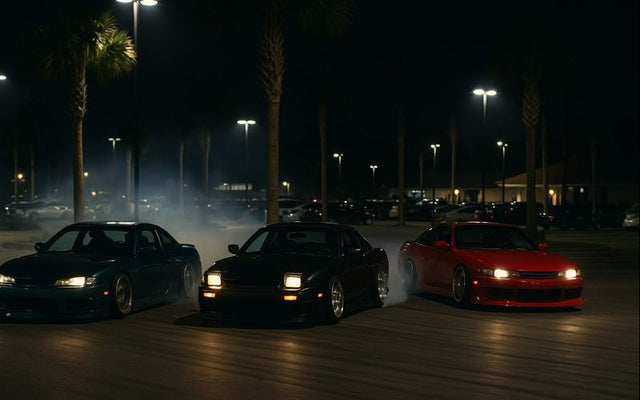
In the demanding world of today's professional oversteer competition, success is not merely solely a product of sheer torque or driver courage. Conversely, it has become a multifaceted science that necessitates a meticulous marriage of picking a proven vehicle platform, arming it with the correct performance parts, and, most essentially, understanding its real-time characteristics on the track through advanced suspension tuning applications. This exhaustive guide functions as your roadmap from the very first idea of a competition vehicle right through to the final telemetry-optimized adjustments that transform a strong machine into a consistent winner. We will thoroughly explore the precise engineering of chassis dynamics adjustment, demonstrating how a modern vehicle dynamics tool like a dedicated telemetry system eradicates approximation and offers exceptional clarity into your chassis's real-world dynamics.
The foundation of any great drift car is, without question, the chassis itself. Certain platforms have achieved renowned standing within the international oversteer culture due to their natural handling characteristics, durable construction, and the immense availability of specialist support available. Selecting the correct starting point is the primary and most crucial choice a enthusiast will make. To illustrate, the BMW E36 is widely regarded as among the finest balanced cars for drifting of all time. Its near-perfect balanced front-to-rear weight, combined with a driven rear axle configuration and robust inline-six powerplants, creates a platform that is at once forgiving for novices and incredibly capable in the control of a expert driver. The successor of this philosophy, the BMW E46, improves on these qualities with a more sophisticated frame, wider wheel track for improved confidence, and even a greater degree of turning capability directly from the factory. A distinct formidable option in the pro scene is the C6 generation Corvette.
This American track weapon brings a particular set of strengths to the drifting sport, including a low-mass aluminum frame, a rear-mounted drivetrain component that contributes to an perfect weight distribution, and the tremendous thrust of a big LS V8 motor. This combination transforms it into an complete monster on track, capable of entering and holding long angles with relatively easy application of acceleration. For builders seeking remarkable bang-for-the-buck, the Nissan 350Z excels as a top-tier example. It is delivered from the factory with a robust body structure, a decent original locking differential, and the responsive V6 motor that offers sufficient horsepower and torque for mastering and advancing in the sport. Its successor, the Nissan 370Z, brings more advancements in body strength, suspension design, and peak powerplant power, establishing its status as a favorite pick among professional pilots. Additional legendary platforms that warrant attention are the agile unique Mazda FC, the most popular Nissan S13 240SX, the V8-powered SN95 generation Mustang, the electronic-equipped E90 3 Series, and the tiny yet surprisingly engaging and forgiving MX-5 Miata. Every single one of these platforms provides a distinct palette of characteristics, difficulties, and possibilities, but they all possess the core ingredients essential to be transformed into a competitive drift car.
However, choosing the right platform is only the beginning. To release the true capability of any of these cars, substantial changes to the steering and chassis control systems are utterly non-negotiable. This is where the realm of precision tuning parts becomes sharp importance. The one most transformative upgrade for a dedicated drift machine is the integration of a high-performance angle modification kit. These sophisticated kits, like those manufactured by performance brands like SLR, are created to dramatically enhance the chassis's possible steering angle. A standard production vehicle is extremely limited in how far its front wheels can rotate, a safety limitation for public road driving. In drifting, conversely, aggressive steering input is continuously required to catch and sustain a drift. An modification kit substitutes the stock hubs, rod ends, and sometimes A-arms with components that enable the wheels to reach steering lock over 70 or even 80 °, compared to a normal stock limit of around 40 to 50 degrees.
This immensely greater capability provides the operator with exponentially greater command during a slide, making it much more straightforward to initiate a drift, sustain it through a sweeping turn, and transition fluidly from one angle to another. The difference in drivability is nothing short of profound. Paired with a properly chosen angle kit is the every bit as critical modification to the vehicle's spring and damper setup. Off-the-shelf or including high-end street coilovers are generally not intended for the particular and harsh demands of competitive oversteer. A purpose-built set of suspension units is paramount. These engineered dampers feature unique damping rates and spring strength that are optimized for the extreme weight transfer that is inherent of drifting. When a driver begins a slide, the chassis's inertia is shifted forcefully to the outer of the corner. Proper drift-spec coilovers handle this shift in a consistent way, enabling the vehicle to settle promptly and offering the driver precise feedback through the wheel and cockpit. They additionally provide accurate setting of ground clearance, shock absorber stiffness, and corner weighting, which are all fundamental aspects of fine-tuning the chassis's dynamics to a specific track or competition technique. Together, a precision-engineered angle modification system and a expertly chosen set of drift-spec adjustable dampers constitute the undeniable hardware cornerstone upon which all subsequent tuning is constructed.
Once the fundamental components is in place, the subsequent essential stage in the project is the precise tuning of the car's suspension geometry. This is the domain of vehicle alignment optimization, a methodology that can appear intimidating to the newcomer but is, in fact, the key to transforming a collection of fast pieces into a harmonious and controllable vehicle. The most debated element of alignment for sliding is undoubtedly camber. Wheel camber is the inclination of the rim in relation to the upright axis when looked at from the forward of the car. When the top of the tire is leaning towards the car, this is called negative camber. In sliding, an inward tilt on the front tires is widely used and is considered critical. The logic is intrinsically related to tire contact.
When a car is cornering at limit slip angles, the chassis rolls to the outer of the turn. This lean makes the outside front wheel to reduce its optimal grip area with the track surface. By introducing inward lean, the tire is pre-leaned to counteract this roll. As the chassis leans into the bend, the tire flattens out with the track, optimizing its traction at the precise time when it is needed most for directional command. Typically, front axle camber settings for a competition sliding vehicle fall between approximately -3 degrees to as extreme as -5 degrees or even greater, depending on the parameters of the car setup, compound selection, and pilot preference. The back wheels also utilize inward lean, but the angles are generally more conservative and more nuanced than the front. Overly aggressive inward lean at the back can result in the chassis excessively prone to oversteer and challenging to control on acceleration use, as it shrinks the available contact patch of the driven wheels during straight-line throttle application. Hence, rear axle camber settings are often in the vicinity of -1 degree to -3 degrees, achieving a careful balance between providing adequate side grip to help in entering and maintaining the drift while still keeping good traction for exiting the turn. Camber is merely one component of the broader alignment puzzle, which additionally includes toe setting, caster angle, and bump steer correction.
Toe angle describes the angle of the wheels when looked at from a bird's-eye view. Positive toe means the leading edges of the wheels are closer together than the trailing edges, while negative toe means the converse. For sliding, a small amount of front negative toe is commonly employed to sharpen the initial directional feel, making the vehicle feel more agile and eager to begin a drift. Rear toe angle is generally set to zero or a very minute amount of positive toe to foster straight-line stability under acceleration. self-centering is the longitudinal or rearward inclination of the steering axis when looked at from the side of the chassis. More positive caster increases steering feel and high-speed stability, and it also suspension tuning tool increases camber effect during steering, which is very advantageous. Tuning these parameters is a complex dance where a change to one setting can and often will impact the others. The traditional approach for dialing in a vehicle's suspension geometry for competition has for a long time been a time-consuming endeavor of guesswork and adjustment. A driver or team would introduce a change based on a hunch, test the car on track, use the operator's individual perception and impressions, and then apply a further change. This process would repeat time after time until the car felt "acceptable" or the available practice time ran out. This system is not only extremely wasteful in terms of hours and costs, but it is also deeply inaccurate.
Pilot perception is a famously unreliable metric, affected by many factors such as tiredness, evolving track conditions, temperature, and just the focus of the pilot on that given run. What feels "loose" on one run might feel "understeery" on the subsequent lap, leading to confusing information and frustrating changes. This traditional challenge in chassis setup is precisely where contemporary technology drift suspension tuning guide has intervened to transform the process.
The rise and application of advanced suspension tuning applications has ushered in a completely new paradigm for building and refining professional drift cars. These tools, showcased by innovative systems like GripDial, operate by physically recording the actual physical movement of the vehicle as it is operated on the course. In contrast to using subjective impression, these tools collect measurable data on critical factors such as shock absorber movement, wheel speed, G-force loading, lock position, and accelerator and brake pedal input. This raw information flow is then interpreted by sophisticated software that can graph and decode the information in a comprehensible way. For the first time, engineers and builders can visualize exactly what the car is performing at each moment of a lap. This ability revolutionizes the entire chassis setup process. Think about the specific task of setting the front negative camber for a particular chassis. As an alternative to making a adjustment from -3 degrees to -3.5 degrees and then driving several runs to try and "feel" a change, a telemetry system can provide instant and definitive feedback. The tool can indicate in a chart how the tire's contact patch is performing during the key moments of a slide: initiation, sustain, and transition. It can show if the current angle is allowing the steering tire to maintain maximum loading or if the rubber is working inefficiently on its outside shoulder.
The system can subsequently make empirical suspension engineering advice for change. Perhaps the information shows that the outside front tire is even overloading its sidewall at -3.5 degrees of negative camber, suggesting that a move towards negative camber, say -4 degrees, might be beneficial. On the other hand, the information might show that the tire is failing to coming up to heat or that the inner edge is wearing unevenly, which could indicate that there is too much inward lean and a slight lessening back to -3.2 degrees would be more efficient. This level of granularity and useful analysis was literally impossible in the days of exclusively mechanical adjustment.
The impact of employing a comprehensive drift telemetry system extends well beyond merely setting camber. It functions as an invaluable suspension tuning guide that is tailored to your exact chassis. When fine-tuning the damping clickers on your adjustable dampers, instead of using vague guidelines or mimicking another driver's settings, you can use the software to see how the vehicle is reacting in reaction to your changes. The application can display the suspension travel path over a lap, highlighting if the dampers are managing the weight transfer properly or if they are permitting the vehicle to oscillate uncontrollably after a transition. It can aid in pinpointing problems like bottoming out or topping out, permitting you to apply informed adjustments to preload settings, damping values, or ground clearance. This process extends just as well to the complex process of car alignment tuning. In addition to camber, the software can give insight into how modifications to toe and caster angle are affecting the chassis's balance during specific parts of a slide. For instance, it can assist you to find the optimal amount of front axle toe-out for your individual steering geometry and driving technique by measuring the quickness of turn-in response and the predictability of the chassis at maximum countersteer. This turns the software an incredibly effective drift suspension tuning guide that is actively calibrated by the actual behavior of your specific car on the circuit. It elevates the entire endeavor from a subjective skill into a methodical development procedure.
Furthermore, the value of a tool like GripDial is not restricted to professional engineers with vast budgets. For the amateur competitor, it functions as an incredible force multiplier. It practically gives the tuner with the analysis of a expert race engineer without needing the corresponding expense. It drastically shortens the tuning process by delivering clear answers to questions that would otherwise take seasons of experience to understand. A driver can understand how their individual car reacts to various adjustments, developing a more profound comprehension of car control in the process. It also democratizes high-level suspension engineering concepts, permitting all drivers with the desire to optimize their vehicle to do so in a structured and successful fashion. This is especially valuable in a sport like oversteer competition, where engineering know-how has traditionally been a closely guarded advantage among professional drivers. Now, that power can be in the garage of any serious enthusiast.
In the final analysis, the path to building and tuning the perfect championship-contending drift car is a comprehensive project that smoothly blends classic engineering wisdom with cutting-edge data technology. It commences with the strategic pick of a capable car, then enhanced by the installation of non-negotiable performance parts like high-performance angle modification systems and correctly selected competition suspension units. The process then moves into the detailed phase of car suspension tuning, where settings like negative camber, toe setting, and caster are carefully configured to match the car's upgraded capabilities and the operator's specific technique. The final step, and what truly distinguishes the today's approach from the old ways, is the use of a sophisticated vehicle dynamics tool. This platform eliminates the guesswork and waste of only seat-of-the-pants tuning by delivering quantifiable, actual information on how the vehicle is actually behaving. It functions as an indispensable suspension tuning tool, a comprehensive coilover setup manual, and a comprehensive chassis development system. Together, this holistic approach guarantees that each and every component of the drift car—from the selection of the platform to the final adjustment on the coilover—is refined for peak competitiveness on the competition venue. It represents the full evolution of the discipline of oversteer driving, connecting physical pilot talent with data-informed vehicle setup to build the ultimate competitive cars possible.